










Catalogue# : EM1059CD
Artist :

William Eaton
ウィリアム・イートン

Title :

Music by William Eaton
ミュージック・バイ・ウィリアム・イートン

Price
:

¥2,625 (本体¥2,500)Foreign: US$22.00

Media : CD


Alan Carvell

MUSIC BY WILLIAM EATON

*Originally released in 1978
*Liner notes by William Eaton
*English/Japanese texts
*L
ots of photos inside.
*First time re-issue & on CD.


*Below notes are taken from the CD booklet.

<Recollections from the 1970s>
The crimson orange clouds broke from a haze into a shower of gleaming rays as I watched my thousandth sunset across the beautiful northern Sonoran desert. Who could describe this wonder? What words could convey the fleeting feeling of eternity that encompasses each present moment.

It was 1977 and I had spent the past two years living in the Arizona desert, walking amongst the chaparral, exploring canyons, running with the coyote, gathering edible plants for food and medicinal use, each night finding a different place to sleep under the stars, with no routines, few responsibilities, and my first opportunities to stop the world.

This was a time dedicated to awakening to each moment and bringing awareness to each and every act. I had helped start a guitar making school in Phoenix, the Roberto-Venn School of Luthiery, two years earlier (1975) with my partners John Roberts and Bob Venn, who were also my teachers. As the administrator for the school I worked my own hours, which left much time for work on my instrument building in the schools workshop, and my awareness time in the natural desert surroundings.

Building stringed instruments had become a passion. I often became mesmerized while peering deeply into the grain patterns of the exotic tropical hardwoods, used for the backs, sides, and necks of the guitars I was working on. The rich colors and intricate figure took me to a hidden, mysterious world, where the elemental connections of all living and inorganic things reside. The sweet, pungent scent of rosewood dust permeated the workshop. Working with sharp hand tools required attention and concentration. Yet, within this demanding activity, there was a solitude and stillness that filled my senses then, as it does now. For me, lutherie became a meditation where all thoughts of future and past dissolved into the present act of creating and watching an instrument take shape in all its complexity, simplicity and detail.

When I started building instruments, playing guitar took on a whole new dimension. The process of envisioning the design, drawing the plans, making templates, cutting, carving, and gluing revealed new insights about the construction, inner workings and physical mechanics of guitars and stringed instruments. From the conception to the birth of each instrument, new layers of meaning unfolded. Cycles, connections and interdependencies became apparent as I contemplated the growth of trees from seed to old age, and the transformation from raw wood to the building of a musical instrument. Now, when I plucked or strummed the strings I had the visceral, tactile sensation of feeling the instrument as a living, vibrating being. I sensed how each part of the instrument contributed to the resonance and tones produced. This heightened sense of awareness changed how I listened and composed. Sometimes listening to only one note, one string vibrating, was a full experience.

During this time I sought out quiet natural environments to play and listen to the "voice" of my 6 string, 12 string, 26 string (Elesion Harmonium) and double neck quadraphonic electric guitar. Deep canyons contained a beautiful resonant quality and echo. A star lit night with a full moon provided all the reflection and endless space by which to project music into the cosmos. The sound of a bubbling stream and singing birds added a natural symphonic tapestry to a melody or chord pattern. These were solo sessions where I felt integrally connected to all that was happening. As I perceived it, everything was participating in a serendipitous dance. Everything was part of the music.

During this time I did not give any public performances, but on some occasions I brought friends along. Some of these informal concerts were adventures into unusual man made structures like the Central Arizona Project siphon tunnels and Arcosanti, as well as the natural environments of canyon and mountain areas. My friends began insisting that I make a recording, but for more than a year I resisted the idea. I was unwilling to have photographs taken or recordings made of any of these present time events. All of my practice at the time was devoted to being fully awake in the present moment, without references to the past or future, a discipline I still practice often. In addition, I was erasing my personal history so as to disengage myself from the thoughts, feelings and doings of others. This nonattachment led to a tremendous personal freedom, and led to explorations and experiences into many levels and layers of reality.

<Creating and recording: Music by William Eaton>
After several years of living a transitory desert life style I decided to find a home. On a bicycle ride near Camelback Mountain I took a side street that led me to an old adobe mansion. An older gentleman was outside pruning the rose bushes. On an intuitive whim I inquired about any rooms that might be available for rent. Earl introduced himself, we talked for a short while, and then he proceeded to show me the grounds and buildings of his estate and suggested that I might help him fix up the guest house and live there. The guest house was separated from the main house, and was situated in the middle of a huge arboretum filled with exotic plant varieties gathered from around the world. I immediately accepted his offer. It was in this secluded botanical garden vintage guest house - that I decided to record an instrumental album of music. The idea was simple; it would be a series of tone poems with no titles or any information attached, only the words "Music by William Eaton". It was conceived as a limited edition of 1000 copies, with no more to be pressed. While some of the songs evolved out of composed chord progressions, most of the songs were played spontaneously, only on the occasion of the recording. These improvised songs havenユt been played since.

How you came to find this album makes you a part of a very small group. The music itself is not particularly noteworthy, yet it has a unique quality. It captures a certain time and a special place, and it is my hope that the original intention of peace, tranquility, and goodwill towards others is felt by the listener. The intent perhaps can be felt in the way in which you listen.

<William Eaton biography>

Early Years:
William started playing music on a ukulele given to him by his Uncle Charlie when he was 7 (1958). The following year he began playing tenor (4 string) guitar, and soon after his father's six string guitar, receiving lessons from local instructors in Lincoln, Nebraska. Learning folk music and traditional music he joined in with his brother Steve and friend Mark Fullerton to form the Balladeers, a folk group with a repertoire from the catalogs of: Kingston Trio, Peter, Paul & Mary, Peter Seeger, Woodie Guthrie and others. His grandfather, Paul Eaton, who played traditional folk music with his brothers Eldred and Dorman, gave him his 1890ユs vintage banjo in 1962, which he practiced and began to incorporate into the folk tunes the Balladeers were playing. William was given a red 1958 Fender jaguar guitar for his 13th birthday and started learning the music of the Kingsman, Chuck Berry, and the new Rock and Roll music. In Junior High and High School William learned the popular music of the Beatles, Jimi Hendrix, Cream, and many other groups. From 1964 - 1969 he played in local groups including Take 5 (see photo taken in 1964, William 3rd from the left), Marksmen, and the Candy Machine providing dance music and entertainment for parties in Lincoln and across the state of Nebraska. After a two year hiatus William was attracted to the acoustic music of Crosby, Stills & Nash, James Taylor, Leo Kottke, Joni Mitchell, and others, and played his old Goya guitar until 1971 when his fortuitous meeting with John Roberts initiated his journey into new music and instrument making.
To the Present:
Acknowledged as one of the worlds great designers and builders of unique guitars and stringed instruments, William built his first guitar in 1971 and co-founded the Roberto-Venn School of Luthiery in Phoenix in 1975, with John Roberts and Bob Venn, where he continues as director of the school. An innovative artist, Eaton has composed for and performed with the Amadeus Trio, Nouveau West Chamber Orchestra, Nebraska Chamber Orchestra and with his own group the William Eaton Ensemble. His recording career includes six collaborations with R. Carlos Nakai for Canyon Records, including two Grammy Nominated albums: Ancestral Voices and In A Distant Place with Nakai, Will Clipman and Tibetan Flutist Nawang Khechog. Separately, Eaton has released five recordings on the Canyon label with the William Eaton Ensemble: Tracks We Leave, Wisdom Tree, Where Rivers Meet, Naked in Eureka and Sparks and Embers.

More recently he has recorded, engineered and mixed three albums at his Wisdom Tree Studio in Sedona, Arizona, including: Quiet Fire (with Gary Stroutsos and Will Clipman on White Swan Records), Ananeah (with Arvel Bird, Mary Redhouse, and Will Clipman on Singing Wolf Records), and the soon to be released Ehgg Music (Electric Harp Guitar Group Eaton, Anthony Mazzella, Fitzhugh Jenkins).

William Eaton official website
<www.William-Eaton.com>
Roberto-Venn School of Luthiery website
<www.roberto-venn.com>
Canyon Records website
<www.canyonrecords.com>


弦楽器の世界的なデザイナー/ビルダーのひとりであるウィリアム・イートンが、自作の楽器をつれづれに奏で録音した1978年発表のファースト・アルバム。ジャケット隅に小さく題字があるだけ。曲目も説明も一切ない、十八編の瞑想的な楽音詩が連なった弦楽器演奏集。作者自身の手による書き下ろし解説を収録し、知られざる本作のストーリーを明かす、世界初CD化。


ウィリアム・イートンはネブラスカ州リンカーンに生まれ、進学のため移住したアリゾナに定住した。アリゾナの砂漠や原野で放浪生活をしていた70年代初頭、かの地にあったホアン・ロベルトのギター工房に足を運んだとき、伝説的な楽器製作家、ジョン・ロバーツ(1921-1999)に出会い、彼とイートンはその後26年に渡るパートナーとなった。また彼はもう一人の楽器製作名人、ロベルト・ヴァンにも師事し、イートンの発案と奔走で1975年には二人を講師とした弦楽器職人を育成する専門学校<The Roberto-Venn School of Luthiery>を開校した。本作は学校を設立して間もないイートンが、自主制作で発表した記念すべきファースト・アルバムであり、全て自作弦楽器での演奏となる。作品は、彼が<楽音詩(tone poem)>と形容する無題の18編の演奏(シークエンス)を積み重ね、ひとつの<世界>としたもの。ジョン・フェイ、ブライアン・イーノ、トミー・ゲレロの諸作も想起させる、静的な中に色とりどりの含みと独自の世界観を伴ったもので、彼の哲学観、精神性をはっきりと提示している。80年代のニューエイジと比較するのも興味深い(イートン自身はニューエイジャーではないと明言している)。彼は楽器工房を経営し、今も演奏活動を続けるミュージシャンである。

★ウィリアム・イートン自身による解説(英語/日本語両方での掲載)

★通常ケース仕様/20頁ブックレット封入


1058DCDpost
*今回配付のDMポストカードです。


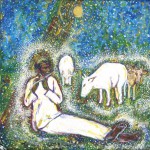
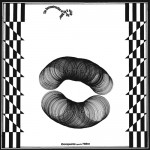
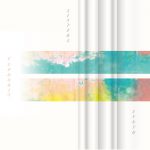
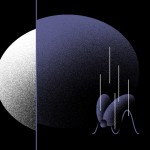
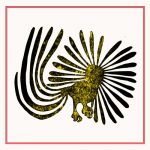
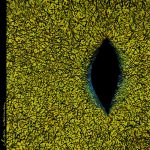
Original label of "Music by William Eaton" LP issued in 1978, which are simplified version of original jacket cover art (we reproduced it on this CD). All these unique & beautiful drawings were made by the artist himself and inspired with exact scene & image he ever saw, it was sunset across the northern Sonoran desert in Arizona, also the seculded botanical garden of the vintage guest house he had lived in 1970s.


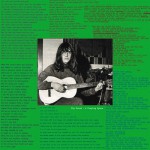
W.E. playing his harp guitar in a field somewhere in Arizona circa 1970s (photo courtesy of W.E.).


26 String Guitar (Elesion Harmoniom), one of the three instruments featured on "Music by William Eaton". This was built in 1977 at Roberto-Venn School of Luthiery. Quilted maple carved back, headstock, and tailpiece. Birds eye maple perimeter trim, bridge, fretboard. Spruce top. Includes 6 double courses of strings, tuned in unison both higher octave), except for the G strings, tuned an octave apart. 2 sets of 7 trings are attached to the perimeter trim, and tuned with zither pins (photo courtesy of W.E.).


W.E. with his beautiful shaped harp guitar in 1970s (photo courtesy of W.E.).


Beautiful back cover art of the original LP.


ALSO YOU MAY INTEREST...
Tony RiversHarmony Beach

■収録曲■
*本作品に曲目はありません*

THIS ALBUM HAS NO TRACK LISTING. Thank you.


other catalogueview carttop page